Windows 4 min read
Tilt and turn or double-hung, uPVC or aluminum, double or triple glazing: what to compare when choosing European windows, and what to ask.
Most American homes grew up with double-hung windows. When homeowners first see a European window, the first surprise is how it opens. The second is how solid it feels when it closes. If you are replacing windows or planning a new build, here is what is worth comparing, in plain terms.
Tilt and turn or double-hung?
A double-hung window has two sashes that slide up and down in the frame. It is familiar, it does not take up room inside, and an air conditioner or a screen fits easily. The trade-off is the seal: sliding sashes rely on brush or sliding weatherstrips, which leave more room for air to get through over the years.
A tilt and turn window works from one handle. Turn the handle one way and the top of the sash tips into the room for safe, draft-free ventilation. Turn it the other way and the whole sash swings in on side hinges, like a door, so you can clean the outside glass from inside the room. When you close it, the sash presses against the frame on all four sides with compression seals, and the hardware locks it at several points around the sash.
One handle, two ways to open, and a sash that locks on all four sides when it closes.
Two practical points before you choose. Because the sash opens inward, plan for blinds, curtains and furniture near the window so it can swing freely. And because nothing opens outward, insect screens go on the outside of the frame. Tilt and turn is one of several opening types we offer, together with fixed windows, swinging sashes and tilt-and-slide.
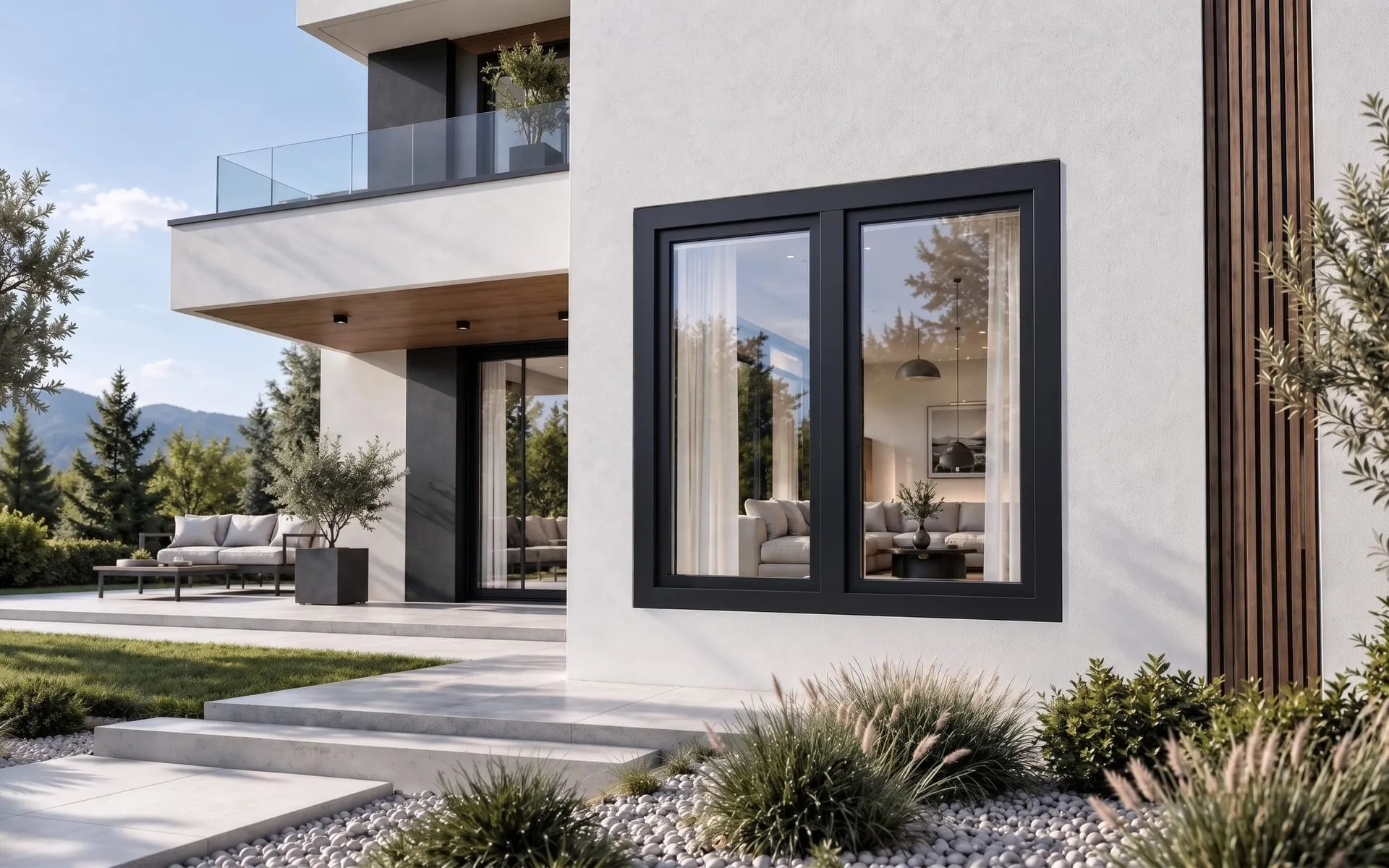
uPVC or aluminum frames?
uPVC (rigid vinyl) is our core range. Our uPVC windows are built on Kömmerling profiles, made in Europe, with several chambers inside the frame that slow down heat loss. They come in three lines that step up in depth and sealing:
- Practical 70: 2¾ in deep, double seal, glass up to 1⅝ in. U-factor 0.17.
- Comfort 76 Plus: 3 in deep, center seal, two or three panes, glass up to 1⅞ in. U-factor 0.17 with triple glazing and 0.26 with double glazing, rated to NFRC 100.
- Performant 88: 3⁷⁄₁₆ in deep, center seal, built for triple glazing up to 2¹⁄₁₆ in. U-factor 0.13.
U-factors are in Btu/h·ft²·°F; a lower number means less heat escapes through the window. The Comfort 76 Plus values are rated to NFRC 100 (Intertek simulation, 2025); the other two are the manufacturer’s product-sheet values.
Aluminum is the choice when you want a metal frame: slimmer sightlines, large glass areas and a crisp modern look. Our aluminum windows use Cortizo thermal-break systems in 60, 70 and 80 mm depths. The thermal break is an insulating strip between the inner and outer aluminum, so the cold outside does not travel straight through the frame.
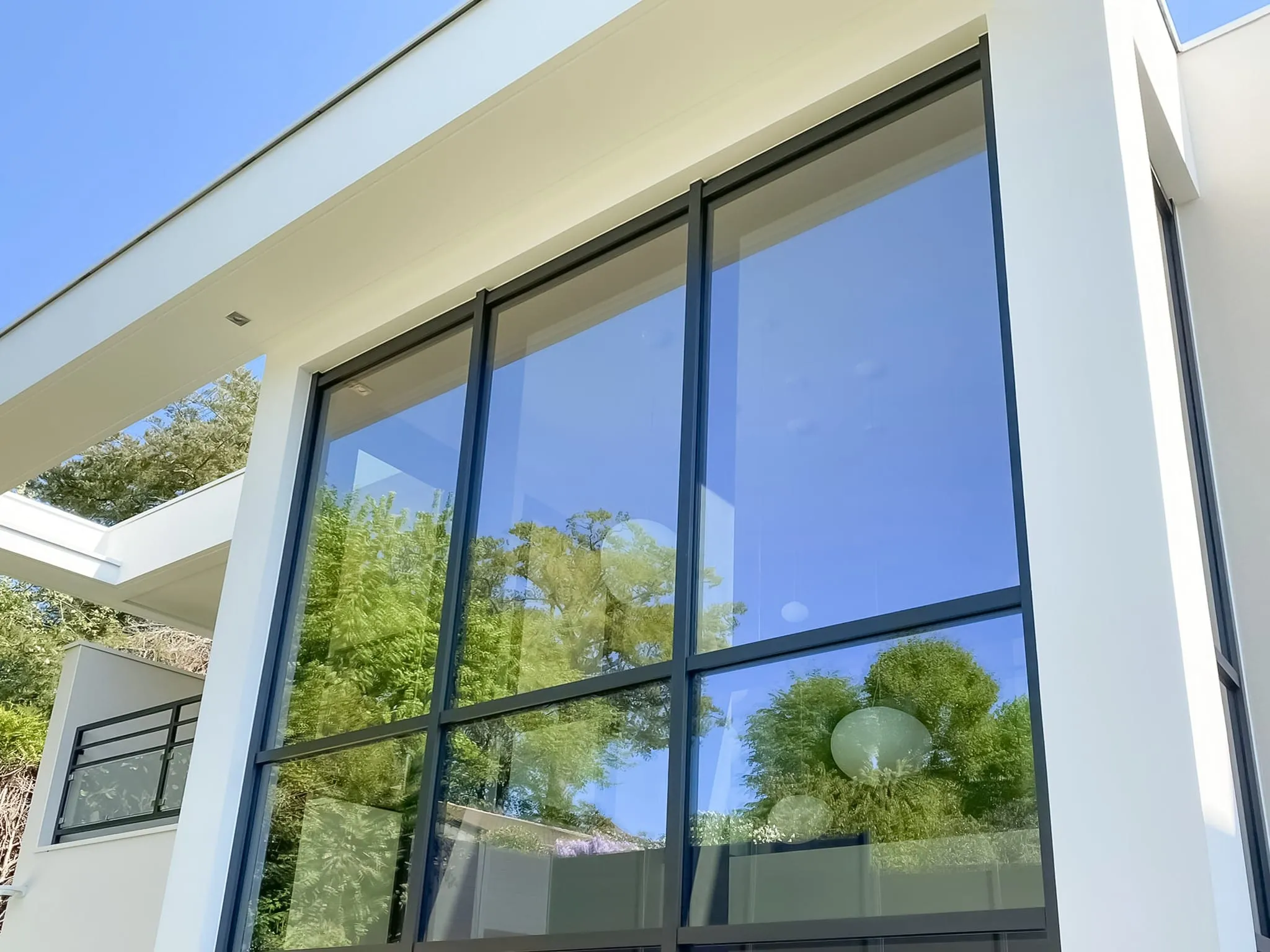
Both materials come in a wide range of colors, from whites and grays to woodgrain finishes, and the finish can be different inside and out. Some finishes cost more than others, so choose the color early and ask for it to be priced in your quote.
Double or triple glazing?
Triple glazing is not always the answer. It adds a third pane, more weight and more cost. It pays off most on cold, exposed or north-facing walls and in rooms where comfort near the glass matters, such as a living room with a large window you sit next to. On a sheltered wall or a small window, double glazing can be the better value. In a Michigan home it often makes sense to mix the two and choose the glazing opening by opening.
What to ask before you order
Whoever you buy from, these questions make quotes easy to compare:
- What is the U-factor of each window, as quoted? The number for the glass alone is not the number for the whole window.
- Which glazing is in each opening, double or triple?
- Which opening type does each window use, and which way does it open? Check every window that sits near a bed, a counter or a blind.
- Who measures, and who installs? At Ava Window we connect you with trusted installation partners, and we train installation teams to fit European windows correctly.
- What does the warranty cover, in writing? Our windows and doors carry the Ava Window limited warranty: 10 years on vinyl frames, 5 years on hardware and glass. Read the full terms before you order.
- What is the lead time? Our custom windows take 6 to 10 weeks: 2 to 4 weeks of production in Europe and 4 to 6 weeks by sea. Standard sizes ship from our Michigan stock within 48 hours. You get the schedule in writing with your proposal.
- What documentation does your project need? If your builder or inspector asks for a specific rating, tell us in your request and we will confirm what is available.
European windows are an investment that you live with for decades, so take the time to compare them properly. If you would like help choosing the right line, glazing and opening type for each room, send us your plans or a few photos and we will put together a quote.
Planning a project?
Send us your plans, measurements or a few photos and we will put together a quote for your home.