Stairs & railings 3 min read
Glass panels or metal balusters for your stair? How the two compare on light, safety, maintenance and style, and what building codes usually ask for.
The railing is the part of a stair you see first and touch every day. It keeps people safe, and it decides how much light and space the stair takes from the room. With AVA Rise, our line of custom steel stairs with wood treads, you can choose glass panels or metal balusters. Here is how they compare.
Light and space
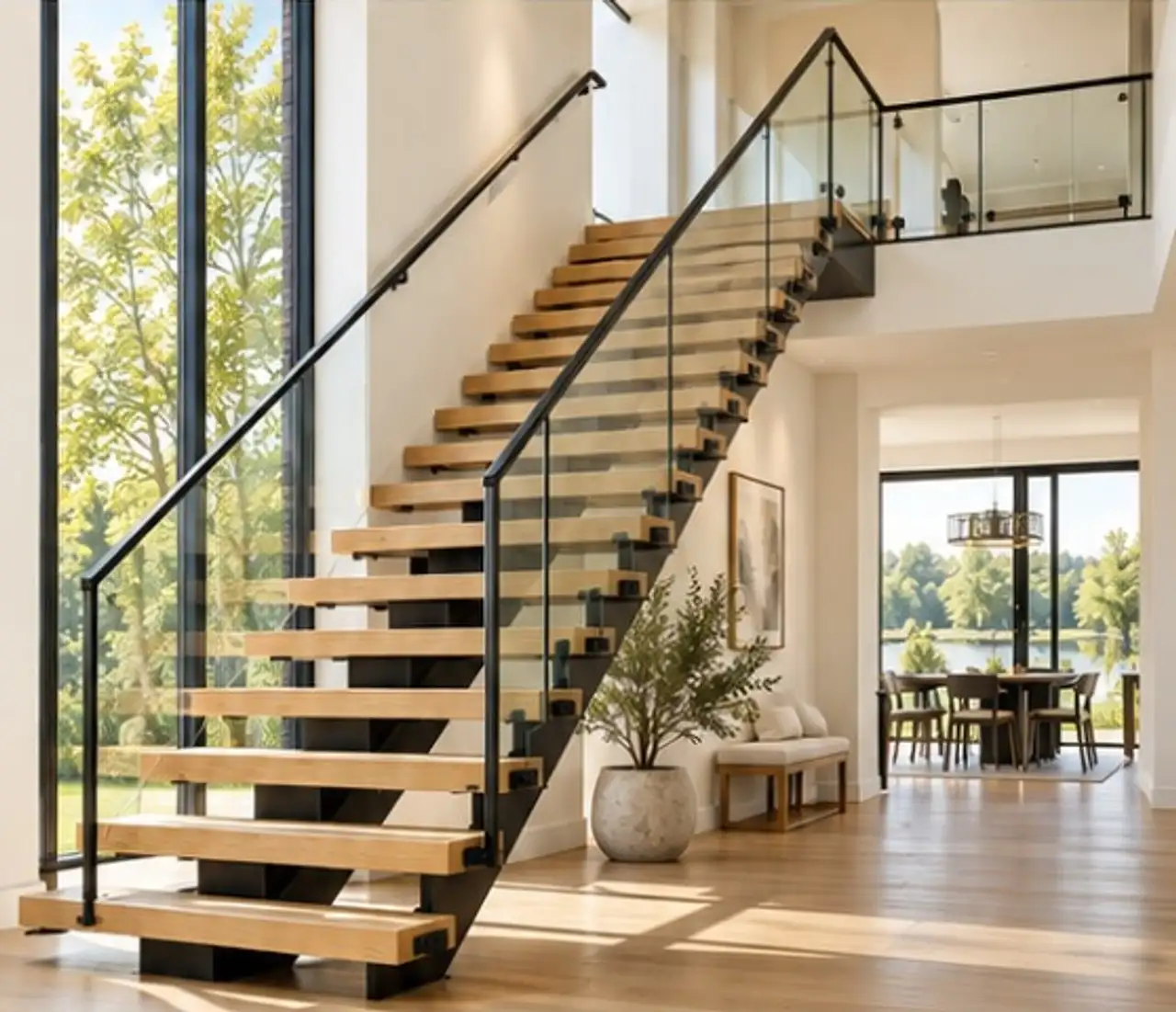
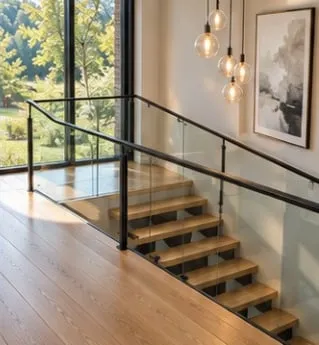
A glass railing is the lightest choice you can make. Clear panels let daylight from a window or a skylight reach the room below, and the eye travels straight through to the treads and the steel structure. On a floating stair, with treads that seem to hang in the air, glass keeps that effect intact. It also works well along a landing or a gallery, where a solid wall would close the space in.
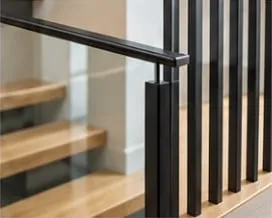
Metal balusters draw a clear, graphic line instead. Vertical bars repeat the rhythm of the treads and give the stair more presence, which suits industrial and loft interiors, darker palettes and rooms with high ceilings where the stair is the sculpture. Balusters also let air and light through, just less of it than glass.
Glass keeps the stair open and light. Metal balusters turn it into a drawing in the room.
You do not have to choose one for the whole house. Many homes use glass on the stair and on the gallery above, where the view matters most, and metal on a secondary stair.
Safety and building codes
Whichever railing you choose, it has to meet the building code where you live. In the United States most residential codes are based on the International Residential Code, and the local building department decides which edition applies and how it is enforced. In general terms, the code looks at a few things:
- Guard height. Open sides of stairs, landings and galleries above a certain drop need a guard of a minimum height.
- Openings. The gaps between balusters, and under the bottom rail, must be small enough that a small child cannot slip through. Many codes test this with a 4-inch sphere.
- Handrails. A stair needs a handrail that is easy to grip, at a set height range above the treads, and continuous along the flight.
- Strength. Guards and handrails must resist a person leaning or falling against them.
- Safety glass. Glass in a railing must be safety glass. Laminated glass is often preferred, because the interlayer holds the pieces in place if a panel breaks.
The exact numbers vary by jurisdiction, so we plan railing heights and spacing to the code that applies to your home, and we design the railing together with the stair rather than adding it at the end.
Living with it
Maintenance
Glass shows fingerprints, dust and water spots, especially on a stair used every day, so plan on wiping the panels down regularly with a glass cleaner and a soft cloth. A handrail on top of the glass, in metal or wood, gives hands somewhere to go other than the panel itself.
Metal balusters hide everyday marks better, but dust settles on each bar and in the corners where bars meet the stringer. A durable finish on the steel, in black or a color that matches your home, keeps them looking good with a quick wipe now and then. Wood handrails need the same care as the treads.
How to decide
Ask yourself three questions:
- Where does the light come from? If the stair sits between a window and the room you live in, glass lets that light through.
- What should the stair say? For a quiet, open look, choose glass. For a bold, architectural line, choose metal.
- Who uses it every day? Small children, pets and busy family stairs may tip the balance toward the finish that is easiest for you to keep clean.
Every AVA Rise stair is made to measure: the steel structure, the hardwood treads in the species and stain you choose, the metal finish and the railing. Send us your dimensions or plans and we will propose the stair and railing that fit your space and your code.
Planning a project?
Send us your plans, measurements or a few photos and we will put together a quote for your home.